

A Strange Headline That Made Me Stop Scrolling
A few months ago, I was casually scrolling through tech news when a headline caught my eye. It mentioned the Pentagon, Big Tech companies, and Tesla’s Cybertruck in the same sentence. Honestly, I had to read it twice.
At first glance, those things don’t seem connected. One is the headquarters of the U.S. Department of Defense, another represents some of the world’s most powerful technology companies, and the last is a futuristic electric pickup truck that looks like it drove straight out of a sci-fi movie.
But the more I looked into it, the more interesting the story became.
The relationship between the Pentagon, Big Tech, and Tesla’s Cybertruck reflects a much larger shift happening right now. Technology is becoming deeply connected to national security, transportation, artificial intelligence, and even military planning.
And that’s exactly why people are paying attention.
Understanding the Pentagon’s Growing Interest in Technology
The Pentagon has always relied on advanced technology. That’s nothing new.
What has changed is the speed of innovation.
Years ago, defense agencies mostly worked with traditional military contractors. Today, many groundbreaking technologies are being developed by private tech companies instead.
Artificial intelligence, cloud computing, autonomous systems, cybersecurity tools, and advanced communication networks are often coming from Silicon Valley rather than traditional defense manufacturers.
Because of this, the Pentagon has been building stronger relationships with major technology firms.
You can see examples through partnerships involving cloud infrastructure, AI research, cybersecurity initiatives, and advanced data analysis systems. The military understands that future conflicts may depend as much on software and computing power as on tanks or aircraft.
That reality has pushed Big Tech closer to national defense discussions than ever before.
How Big Tech Became Part of National Security Conversations
The Rise of AI and Data
Artificial intelligence isn’t just helping people write emails or generate images.
Military organizations around the world are exploring AI for threat detection, logistics planning, intelligence gathering, and battlefield analysis.
Companies like Microsoft, Google, Amazon, and other major technology firms have invested billions into AI development. Naturally, defense agencies want access to some of these capabilities.
This has created both opportunities and debates.
Some people believe collaboration between government and technology companies strengthens national security. Others worry about privacy, surveillance, and ethical concerns.
Either way, Big Tech now plays a significant role in conversations that were once limited to defense experts.
Cloud Computing’s Strategic Importance
A few years ago, cloud computing sounded like something only IT departments cared about.
Now it’s considered a strategic asset.
Modern military operations generate enormous amounts of data. Managing that information requires powerful cloud infrastructure capable of handling complex tasks quickly and securely.
That’s one reason large technology companies continue working closely with government agencies.
The line between technology innovation and national security keeps getting thinner.
Where Tesla Fits Into the Picture
Tesla often gets grouped with automotive companies, but that’s only part of the story.
In many ways, Tesla operates more like a technology company.
Its vehicles rely heavily on software, sensors, advanced battery systems, connectivity, and AI-driven features. The company has consistently pushed the automotive industry toward electrification and digital integration.
The broader electric vehicle market is evolving just as quickly. If you’re interested in how the industry is changing beyond Tesla, check out our guide on Tpoinnto.
That’s why Tesla frequently appears in discussions about future transportation systems.
And then there’s the Cybertruck.
Why the Tesla Cybertruck Stands Out
A Design Nobody Could Ignore
When Elon Musk first unveiled the Cybertruck, reactions were all over the place.
Some people loved it.
Others hated it.
Nobody ignored it.
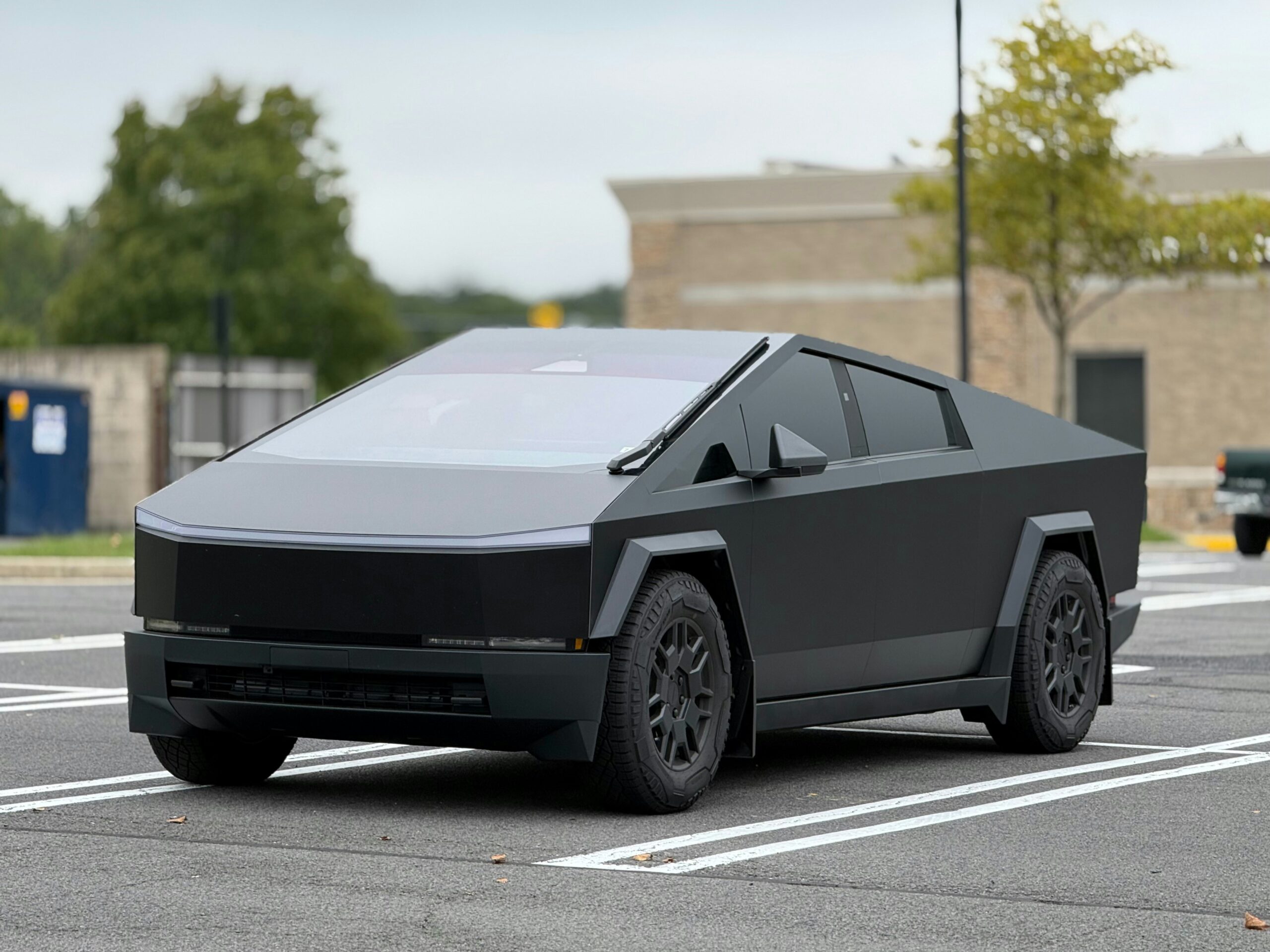
Its angular stainless-steel body looked completely different from traditional pickup trucks. It immediately became one of the most talked-about vehicle launches in recent memory.
I remember showing photos of it to a friend who thought it was a movie prop rather than a real vehicle.
That reaction was pretty common.
Built for Tough Conditions
Beyond appearance, Tesla promoted the Cybertruck as a highly durable vehicle.
Features such as its stainless-steel exterior, electric powertrain, off-road capability, and advanced technology package attracted attention from many different industries.
Readers curious about the vehicle’s latest features, battery range, and design updates can explore the Tesla Cybertruck specifications directly from Tesla.
Construction companies looked at it.
Adventure enthusiasts looked at it.
Government agencies reportedly looked at it too.
When organizations evaluate future transportation options, durability and efficiency matter. Electric vehicles bring potential advantages, including lower maintenance requirements and reduced fuel dependency in certain scenarios.
That’s one reason discussions involving the Pentagon and Tesla occasionally generate headlines.
The Pentagon Big Tech Tesla Cybertruck Connection Explained
The connection isn’t necessarily about one specific project.
Instead, it reflects several larger trends happening simultaneously.
First, the Pentagon is actively exploring emerging technologies.
Second, Big Tech companies continue influencing areas that extend far beyond consumer products.
Third, Tesla has positioned itself as both an automotive and technology innovator.
When those three forces intersect, people naturally start asking questions.
Could electric vehicles support military logistics in certain environments?
Could AI-driven transportation systems improve operational efficiency?
Could advanced battery technologies become strategically important in the future?
These are the kinds of questions analysts, policymakers, and technology experts are discussing.
The Cybertruck simply becomes a highly visible symbol of that broader conversation.
Electric Vehicles and Future Defense Strategies
Reducing Fuel Dependence
One of the biggest logistical challenges in military operations has traditionally been fuel supply.
Transporting fuel can be expensive, complicated, and vulnerable to disruption.
Electric vehicles introduce a different model.
They’re not a perfect solution for every situation, but advancements in battery technology continue expanding what’s possible.
Some experts believe future defense operations may incorporate a mix of traditional vehicles, electric systems, and autonomous platforms.
Mobile Power Capabilities
Another interesting advantage involves power generation.
Modern electric vehicles can potentially provide energy for equipment, communication systems, and field operations.
That capability creates possibilities that weren’t available with conventional vehicles.
While widespread adoption remains a long-term discussion, research in this area continues growing.
The Role of Innovation in Modern Defense
One thing that’s become clear over the last decade is that innovation moves fast.
Governments can’t afford to ignore technological breakthroughs happening in the private sector.
That’s why organizations increasingly monitor developments from companies such as Tesla and other technology leaders.
Resources like Tesla’s official website showcase how rapidly electric vehicle technology is evolving, while institutions such as the U.S. Department of Defense continue discussing modernization and emerging technologies.
The future isn’t being built by a single industry anymore.
It’s being shaped by collaboration across multiple sectors.
Why This Topic Continues Generating Headlines
People love stories that combine technology, government, and innovation.
The Pentagon represents national security.
Big Tech represents digital transformation.
Tesla represents disruption and futuristic thinking.
Put those elements together and you get a topic that naturally attracts attention.
Even when specific rumors fade away, the underlying themes remain relevant.
Artificial intelligence isn’t going away.
Electric vehicles aren’t going away.
Advanced technology partnerships aren’t going away.
That’s why discussions surrounding the Pentagon, Big Tech, and Tesla’s Cybertruck continue resurfacing.
Conclusion
The phrase “pentagon big tech tesla cybertruck” may sound like a random collection of buzzwords at first, but it actually highlights a fascinating shift happening across industries.
Technology companies are influencing areas that once belonged exclusively to government agencies and defense contractors. Electric vehicles are becoming more advanced, more capable, and more strategically important. Meanwhile, organizations like the Pentagon are paying close attention to innovations that could shape the future.
Whether the Cybertruck ultimately plays a major role in government operations or simply remains a symbol of technological change, one thing is clear: the conversation isn’t really about a truck. It’s about how technology, transportation, and national security are becoming increasingly connected in ways few people imagined just a decade ago.
FAQs
What does the keyword “pentagon big tech tesla cybertruck” refer to?
It generally refers to discussions connecting U.S. defense interests, major technology companies, and Tesla’s Cybertruck as part of broader conversations about future technology and transportation.
Is the Pentagon using Tesla Cybertrucks?
Public discussions have occasionally linked Tesla vehicles with government interest, but large-scale military adoption of Cybertrucks has not been officially established.
Why is Big Tech important to the Pentagon?
Big Tech companies develop critical technologies such as artificial intelligence, cloud computing, cybersecurity systems, and advanced data platforms that can support national security objectives.
Could electric vehicles become common in defense operations?
Many experts believe electric vehicles may play a growing role in certain military and government applications as battery technology continues improving.
Why does Tesla receive attention from defense analysts?
Tesla is viewed as more than a car company. Its work in software, AI, battery technology, and advanced manufacturing makes it relevant to discussions about future transportation and technological innovation.
